

Canadian Gas Association
Canadian Fuels Association
Canadian Propane Association
Canadian Association of Petroleum Producers
The Canadian Energy Reliability Council’s mission to build new models of collaboration across the entire energy system and help reframe how policy-makers and the public think about reliability.
Most people have an intuitive sense of energy reliability: Can I find somewhere reasonably close to refuel my car. and is that facility open when I need it? When I come home and turn on the switch, does the light go on? And when winter comes and the temperature drops, does the heating system in my home provide me with the warmth I need?
Building a trusted library of energy reliability and resilience resources.
Deepening understanding through stakeholder collaboration.
Strengthening cooperation across Canada’s energy systems.
Encouraging informed discussions on energy reliability and resilience.
From renewable energy projects to grid reliability and energy efficiency, we provide end-to-end solutions tailored to your needs.

Strengthening the grid with modern, resilient infrastructure.
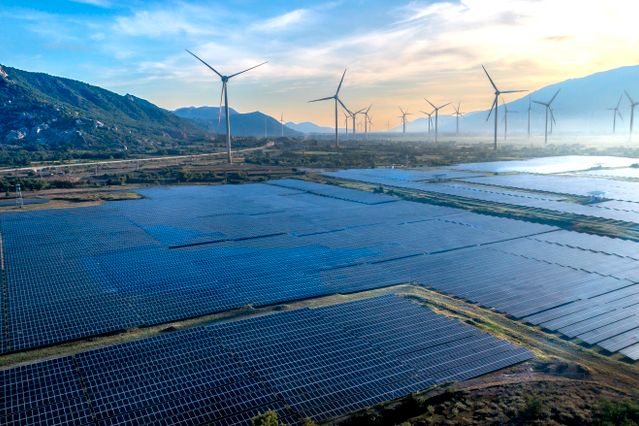
Solar, wind and clean energy solutions for a sustainable future.
Smarter energy use for lower costs and greater impact.

Comment on any specific reliability issue related to any specific utility or energy supplier.
Advocate for or against the substantive merit of any particular environmental, social or other policy that may or may not have an impact on reliability.
Advocate for or against any specific reliability standard, rule or other requirement for any utility or anyone else involved in the delivery of energy.
Have questions or insights about energy reliability? Get in touch with our team to start the conversation.

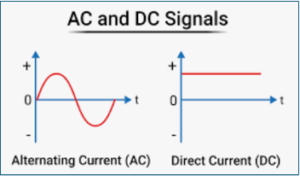
For purposes of illustration, electricity can be thought of as a stream of electrons flowing down a wire. This flow is called a current. AC – alternating current – and DC – direct current – refer to the way the electrons flow. AC flows back and forth while DC is a constant one-directional flow, as shown in the graphs to the left.
Electrons flow when a voltage is applied. Voltage is the force that causes them to move and as a result is also called electromotive force. To create an alternating current requires an alternating voltage and to create a direct current requires a direct, or constant, voltage.
The mathematical description of the AC voltage and current waveform is a sinewave. The amount of time between the times the waveform rises through the x axis is called the period and the number of times it does so in a given time period is called the frequency.
Line losses are the amount of electricity that is lost as it is transmitted along a wire.
As electricity travels down a wire, some of the electrical energy is converted to heat due to the resistance of the wire and is lost. The amount of electricity lost is directly proportional to the square of the amount of current.
The relationship between voltage, current and the total amount of electrical energy is:
P = V * I
Where P = total electrical power which is the amount of electrical energy in a given time period, V= voltage and I =current. From this formula you can see that the higher the voltage is, the less the current needed to deliver the same amount of power.
Given this relationship and the fact that the larger the current the larger the line losses, engineers try to ensure that when transporting electricity over long distances the current is low. To transport the same amount of electric power at that lower current requires them to raise the voltage.
In the early days of electricity production, much electricity generated was DC. However, DC electricity was challenging to transport over large distances at the voltage required by the customer because of the line losses discussed in the previous question.
As we saw, to reduce line losses requires higher operating voltages. However, we don’t want to deliver to a customer at a higher voltage than their appliances need. Therefore, to reduce line losses engineers needed a way to “step up” the voltage for transmission and “step down” the voltage before it is delivered to the customer. DC electricity was difficult to step up and down at that time.
The “War of the Currents” was a late 19th-century conflict between Thomas Edison, who championed DC, and Nikola Tesla along with George Westinghouse, who advocated for alternating current (AC). While Edison’s DC system was initially more established, Tesla’s AC system proved more efficient for the long-distance transmission of power, ultimately becoming the standard for electricity generation and distribution.
The solution to this problem was a transformer. A transformer steps the voltage up and down as needed, but it only works on AC not on DC.

This is because it relies on a fundamental principle of electricity discovered by Michael Faraday. Faraday’s law of induction, a cornerstone of electromagnetism, states that a changing magnetic field – such as one caused by a changing current in a nearby coil – induces a voltage in a circuit. This induced voltage is directly proportional to the rate of change of magnetic flux through the circuit. In simpler terms, if you move a magnet near a wire loop or change the current in a nearby coil, you can create a voltage in that loop or coil.
By carefully designing the number of coils in the primary and secondary circuits, the amount of induced voltage can be easily predicted. For the math wizzes out there the “transformer equation” is:

Where:
Vs: Voltage in the secondary coil
Vp: Voltage in the primary coil
Ns: Number of turns in the secondary coil
Np: Number of turns in the primary coil
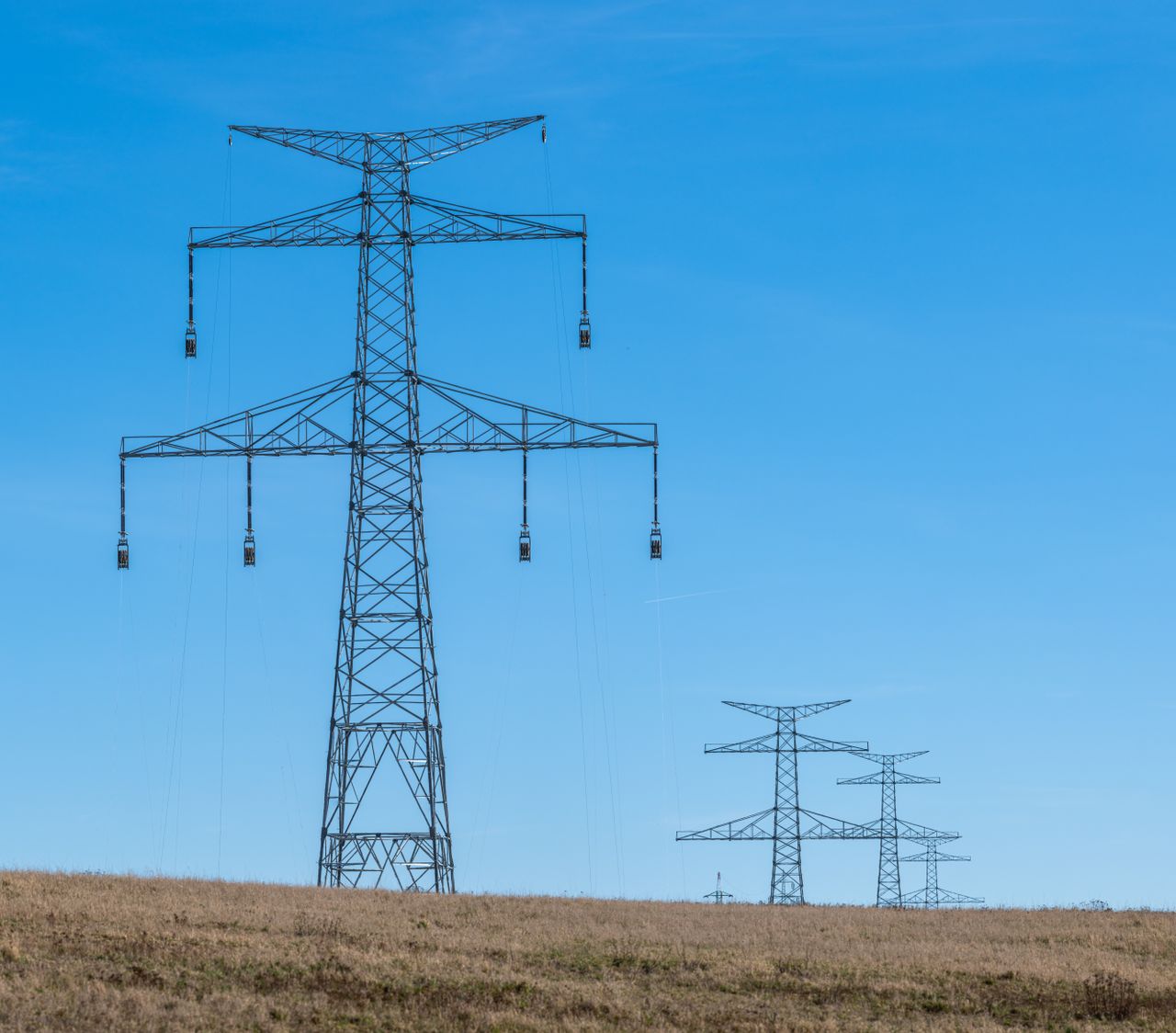
The answer to this question is: it depends. Historically, most generation consisted of a process to convert chemical energy in a fuel, such as converting coal or natural gas, into mechanical energy to spin a shaft. Typically, natural gas is converted directly within a turbine, while coal is typically burned in a boiler and the resultant heat creates steam which drives the turbine.
In the case of hydro-electric generation, the primary energy is gravity, not chemical and in the case of nuclear it is energy released from the fission of atomic nuclei. The heat generated from nuclear fission is used to create steam, which then drives a turbine in much the same way the heat from coal combustion is utilized .
Regardless, whether the primary fuel is chemical, gravitational or nuclear, the result is a spinning shaft. That shaft is connected to a generator, which can be thought of as a lot of coils of wire spinning inside a magnetic field to produce electricity. It uses the same laws of electromagnetic induction we saw in the previous question. Because of the rotation of the generator, the voltage of the electricity produced varies between a negative and a positive maximum, which produces AC.
However, intermittent renewables and battery storage systems don’t produce AC (see Question 5), they produce DC which must be converted to AC by power electronic devices called inverters.